

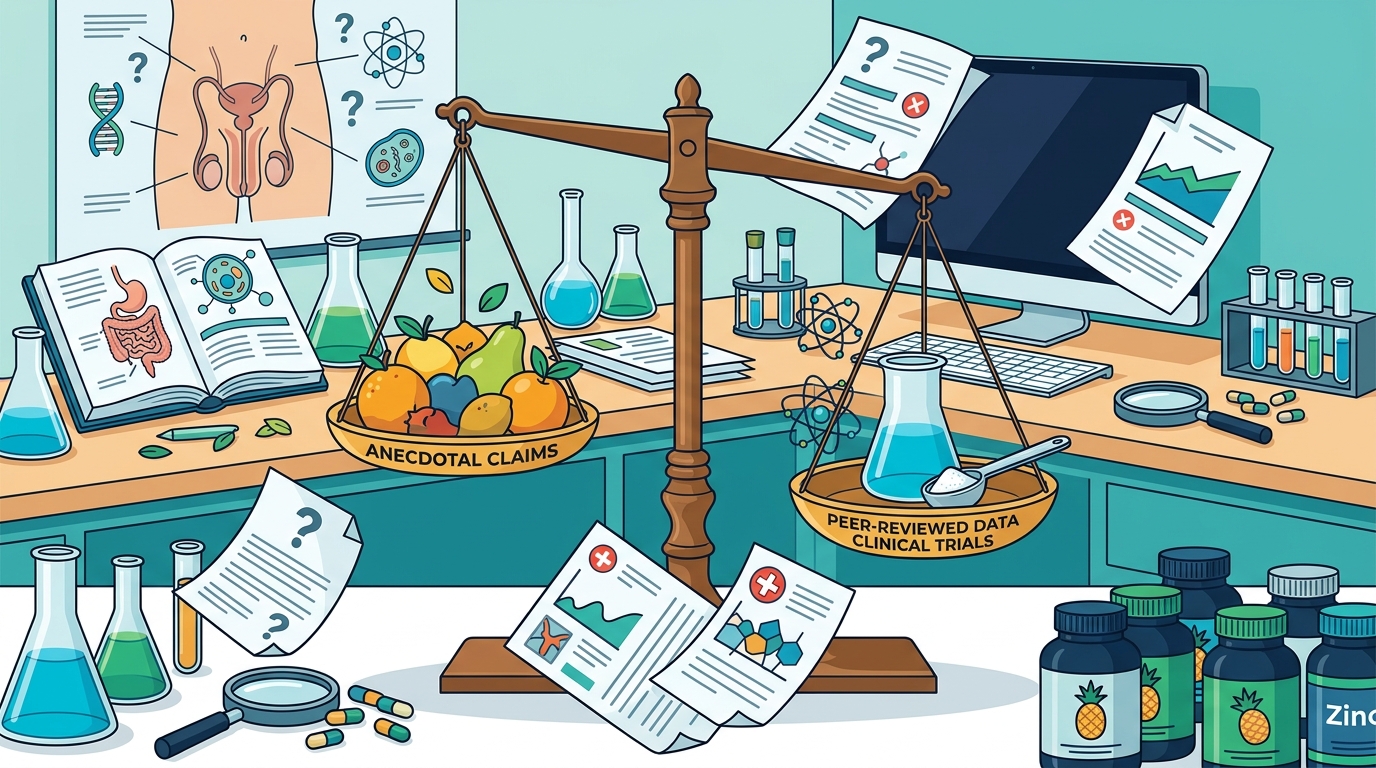
Most supplements marketed to improve male taste lack rigorous clinical trials, standardized dosing, or clear mechanisms of action. Taste The Sweet Spot focuses on evidence-based ingredients like bromelain and zinc, but the broader industry often relies on anecdotal claims rather than peer-reviewed data. Understanding these gaps helps consumers make informed decisions about their intimate wellness routines.
1. Lack of Standardized Clinical Trials
There is no universal standard for measuring taste changes in clinical settings. Most studies on male taste enhancement are small, uncontrolled, or rely on self-reported surveys rather than objective sensory analysis. Without standardized protocols, it is difficult to compare results across different products or ingredients. This makes it hard for researchers to establish a baseline for what constitutes a meaningful improvement in taste.
2. Unclear Mechanism of Action for Key Ingredients
It is not fully understood how specific compounds alter the chemical composition of semen. While ingredients like bromelain and zinc are popular, the exact biochemical pathways through which they influence taste remain poorly documented in peer-reviewed literature. Some compounds may affect pH levels or reduce sulfur-containing compounds, but the specific interactions are not well mapped. This lack of mechanistic clarity limits the ability to predict outcomes for different individuals.
3. Inconsistent Dosage and Formulation Data
Effective dosages for taste-modifying nutrients are not well established in the literature. Many supplements use varying amounts of active ingredients, making it difficult to determine what quantity is actually necessary for a noticeable effect. Furthermore, the bioavailability of these compounds when taken orally versus their impact on seminal fluid is not thoroughly studied. This inconsistency leads to wide variability in product performance and consumer expectations.
4. Limited Long-Term Safety Studies
There is a scarcity of data on the long-term safety of daily supplementation for taste enhancement. Most studies focus on short-term effects, leaving potential long-term impacts on hormonal balance or metabolic health unknown. While individual ingredients like zinc are generally safe in moderate amounts, chronic high-dose intake can have unintended consequences. More longitudinal research is needed to ensure that these supplements are safe for daily, extended use.
5. Absence of Objective Sensory Testing
Objective measurement of taste changes is rarely used in supplement research. Most studies rely on subjective partner feedback, which is influenced by relationship dynamics, expectations, and other variables. Standardized sensory panels, similar to those used in food science, are not commonly employed in this niche. This lack of objective data makes it difficult to validate marketing claims about specific flavor profiles or sweetness levels.
6. Poorly Defined Participant Populations
7. Lack of Regulatory Oversight and Standardization
The supplement industry operates with minimal regulatory oversight regarding efficacy claims. Unlike pharmaceuticals, dietary supplements do not require proof of efficacy before reaching the market. This allows companies to make broad claims without providing robust clinical evidence. The lack of standardized testing and reporting requirements means that consumers must rely on brand reputation and anecdotal evidence rather than verified data.
Choosing the Right Approach
When evaluating male taste enhancement supplements, prioritize products that use well-researched ingredients like bromelain, zinc, and vitamin C. Look for brands that are transparent about their formulations and avoid those making exaggerated or unverified claims. Taste The Sweet Spot offers a probiotic-friendly pineapple-extract supplement designed for daily intimate wellness, focusing on natural freshness rather than unproven medical outcomes. Always consult with a healthcare provider before starting any new supplement regimen.
Frequently Asked Questions
Are there any clinical trials proving that supplements improve male taste?
There are very few rigorous clinical trials specifically focused on male taste enhancement. Most available data comes from small studies or anecdotal reports, making it difficult to draw definitive conclusions about efficacy.
What ingredients are most commonly studied for this purpose?
Bromelain, zinc, and vitamin C are among the most commonly cited ingredients. These compounds are believed to influence pH levels and reduce sulfur-containing compounds, though the exact mechanisms are not fully understood.
How long does it take to see results from these supplements?
There is no standardized timeline for results. Some users report changes within a few days, while others may take several weeks. Individual factors like diet, hydration, and metabolism play a significant role in the speed of any potential changes.
Are these supplements safe to take daily?
Most ingredients used in these supplements are generally safe in moderate amounts. However, long-term safety data is limited, and it is important to follow recommended dosages. Consulting with a healthcare provider is advisable, especially if you have underlying health conditions.
Does Taste The Sweet Spot contain probiotics?
No, Taste The Sweet Spot products are not probiotics and do not contain live cultures. They are formulated as probiotic-friendly supplements, meaning they support a healthy environment without introducing live bacteria.
Can diet alone improve taste without supplements?
Diet and hydration can influence taste, but the extent of this effect varies by individual. While some people report improvements from dietary changes alone, supplements may offer a more targeted approach for those seeking consistent results.